UK Restaurant Packaging Spend Benchmarks: What Multi-Site Operators Should Actually Be Paying
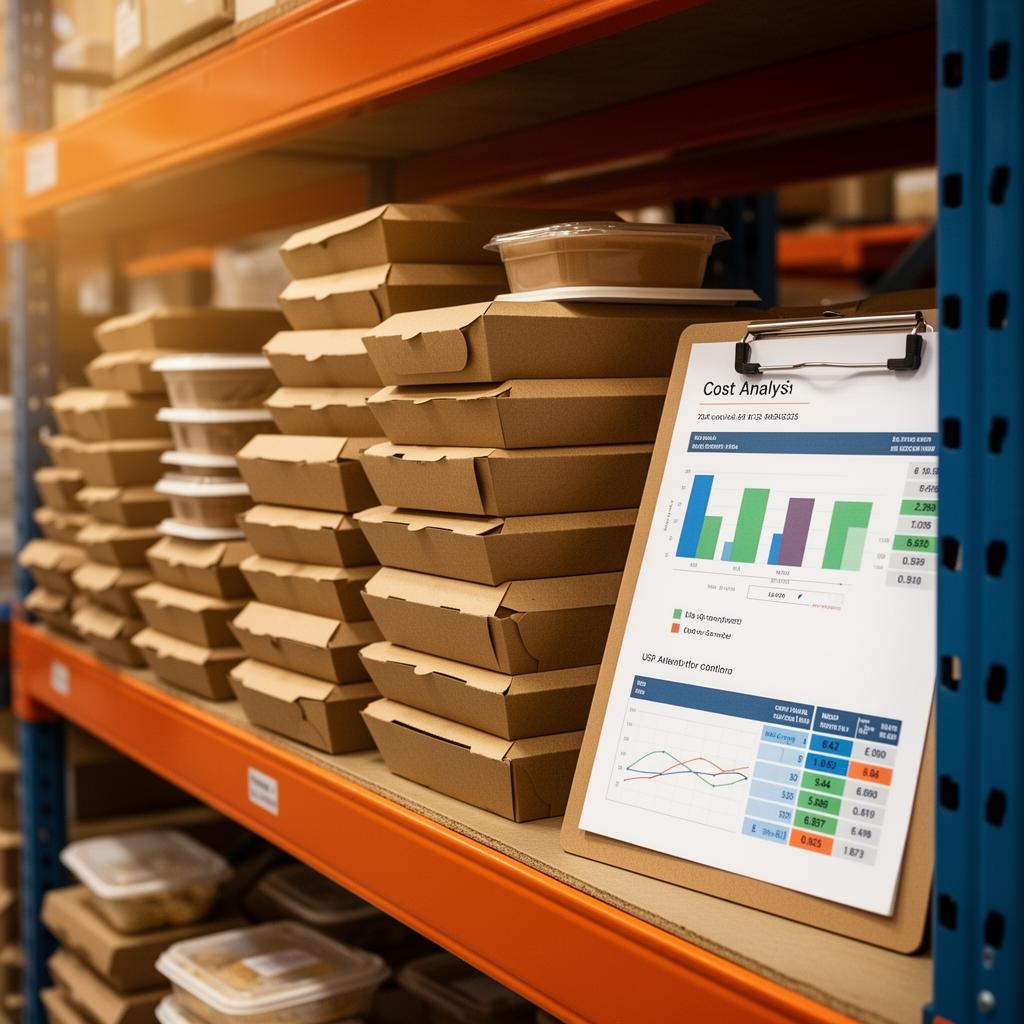
Most multi-site UK food service operators are paying 20 to 35% more than benchmark on packaging. Here's what the numbers actually look like by format, and how to tell if you're overspending.
The UK's food service packaging market is one where most multi-site operators are paying 20 to 35% more than they should. That figure comes from reviewing real invoice data across operators with 5 to 80 sites, comparing their actual per-unit costs against current manufacturer pricing for equivalent specifications. The gap is not a negotiation failure. It is a structural feature of how the merchant procurement model works at scale.
How much should a UK restaurant spend on packaging?
There is no single answer because packaging spend varies significantly by format, menu type, and delivery mix. But after 10 years inside UK packaging merchants and reviewing spend data across dozens of multi-site operators, the ranges below reflect what I consistently see.
For a **quick service or fast casual operator** running 10 to 50 sites with a heavy takeaway and delivery mix, packaging typically sits between **3% and 6% of revenue**. The higher end of that range applies to delivery-first brands and dark kitchens where every single order leaves the building in packaging.
For a **casual dining operator** with a higher dine-in mix, packaging is usually **1.5% to 3% of revenue**. The numbers are lower because a significant proportion of orders are served on reusable crockery, with packaging only needed for takeaway, delivery, and back-of-house wrapping.
For **coffee shop chains**, packaging can be surprisingly high relative to revenue, often **4% to 7%**, because the core product is a single-serve hot drink in a disposable cup. Every transaction generates a packaging cost.
These ranges are not industry reports. They are based on what I see when I open 12 months of SKU-level invoice data for operators in these categories.
Why are most operators paying above benchmark?
The gap between what operators pay and what they could pay comes down to three structural factors.
The merchant margin structure
Packaging merchants typically operate on margins of 35 to 50% on food service accounts. That is not a criticism. The merchant model adds genuine value through range, delivery frequency, credit terms, and the ability to handle hundreds of SKUs from dozens of manufacturers under one account. For an operator with two or three sites, that convenience is worth paying for.
The problem is that the margin stays broadly the same as you scale. An operator with 5 sites and an operator with 50 sites are often paying similar per-unit prices from the same merchant. Volume does not automatically translate to better pricing in the way most operators assume.
No visibility over per-unit costs
Most multi-site operators know their monthly packaging total. Very few know their per-unit cost on their top 20 SKUs. Without that visibility, there is no way to benchmark. You cannot negotiate what you cannot measure.
When I run a spend analysis, the first thing I do is pull 12 months of invoices and break them down to per-unit cost by SKU. That exercise alone, before any sourcing work happens, is usually enough to show whether there is a material gap.
Specifications are not reviewed
Operators rarely revisit packaging specifications once they are set. A box that was specified three years ago for a menu item that has since changed is still being ordered at the same spec, from the same supplier, at the same price. Material weights, print finishes, and barrier coatings are all areas where specifications drift from what is actually needed.
Over-specification is not just a packaging quality issue. Under the UK's EPR fee structure from 2026, heavier packaging and certain material types attract higher fees. Getting the specification right is now a cost issue and a compliance issue simultaneously.
What does the typical markup from a packaging merchant look like?
To put real numbers on it: if a manufacturer sells a corrugated takeaway box at 18p per unit, the merchant will typically sell the same box to a food service operator at 28p to 32p. That is the 35 to 50% margin working as designed.
At 10,000 units a month across a multi-site operation, that single SKU gap of 10p to 14p per unit represents £1,000 to £1,400 per month. Scale that across a full packaging portfolio of 30 to 60 SKUs and the annual total adds up quickly.
In the most detailed review I have completed to date, a single operator with 320+ host kitchens was overpaying by £310,000 annually, a 26% reduction when moved to direct manufacturer sourcing with 3PL integration. That is an extreme example in terms of scale, but the percentage gap was consistent with what I see at much smaller operators.
How do you benchmark your own packaging spend?
You do not need to hire a consultant to get an initial read. Three steps will tell you whether there is a material gap worth investigating.
**First**, pull your last 12 months of packaging invoices and break them down by SKU. You need per-unit pricing, not just totals. If your accounts team can export the data, this takes an afternoon. If your merchant provides itemised invoices, which most do, the data is already there.
**Second**, identify your top 10 SKUs by volume. In most food service operations, the top 10 SKUs account for 60 to 80% of total packaging spend. Focus there.
**Third**, get a direct quote from a manufacturer for those top 10 items at equivalent specification. Same material, same weight, same print, same barrier coating. Compare the per-unit prices.
If the gap on those 10 items is consistently 25% or more, the rest of the portfolio will almost certainly follow the same pattern.
What costs come with switching to direct sourcing?
This is the question every CFO asks, and it is the right one. The headline saving means nothing if hidden costs eat into it.
Direct sourcing introduces two costs that the merchant model absorbs: **3PL logistics** (storage, pick, pack, and delivery to each site) and **working capital** (bulk ordering requires upfront commitment).
3PL costs vary depending on delivery frequency and number of sites, but typically run between 8% and 15% of the product cost. That eats into the gross saving but still leaves a significant net reduction for most scaled operators.
Working capital impact depends on order frequency and minimum order quantities. Most manufacturers work on 4 to 6 week lead times with MOQs that require some forward planning. For operators used to next-day delivery from a merchant, this is the biggest operational change.
The net saving after 3PL and working capital considerations is typically 20 to 40% lower than the gross saving. But even at the conservative end, for an operator spending £200,000 a year on packaging through a merchant, a 20% net saving is £40,000 annually. For an operator spending £500,000, it is £100,000.
When is the right time to review packaging procurement?
The operators who get the most value from a procurement review share a few characteristics. They have scaled past 5 to 10 sites and their packaging spend has become a material line item. They are buying primarily through one merchant and have not benchmarked that relationship in the last two to three years. And they are seeing costs rise without a clear explanation of what is driving the increases.
If NI contributions went up in April, minimum wage went up, and your packaging invoice is also climbing, packaging is one of the few input costs you can actively reduce rather than just absorb.
For a free, no-obligation assessment of your current packaging spend, including a SKU-level benchmark against direct manufacturer pricing, contact Origin Sourcing at [info@originsourcing.co.uk](mailto:info@originsourcing.co.uk) or visit [www.originsourcing.co.uk](https://www.originsourcing.co.uk).

About the Author
Adam Middleton
Founder, Origin Sourcing
Adam Middleton is the founder of Origin Sourcing, a UK packaging procurement consultancy that helps multi-site food service and hospitality operators transition from merchant-based procurement to direct manufacturer sourcing. With 10 years of experience inside UK packaging merchants, Adam works across corrugated, carton, film, rigid plastic, and compostable formats to deliver verified cost savings and supply chain transparency.
Want to discuss this topic?
Our experts are ready to help you implement these insights for your business.
Get in Touch