EU Packaging Regulation 2026: What UK Food Service Operators Need to Know About PPWR
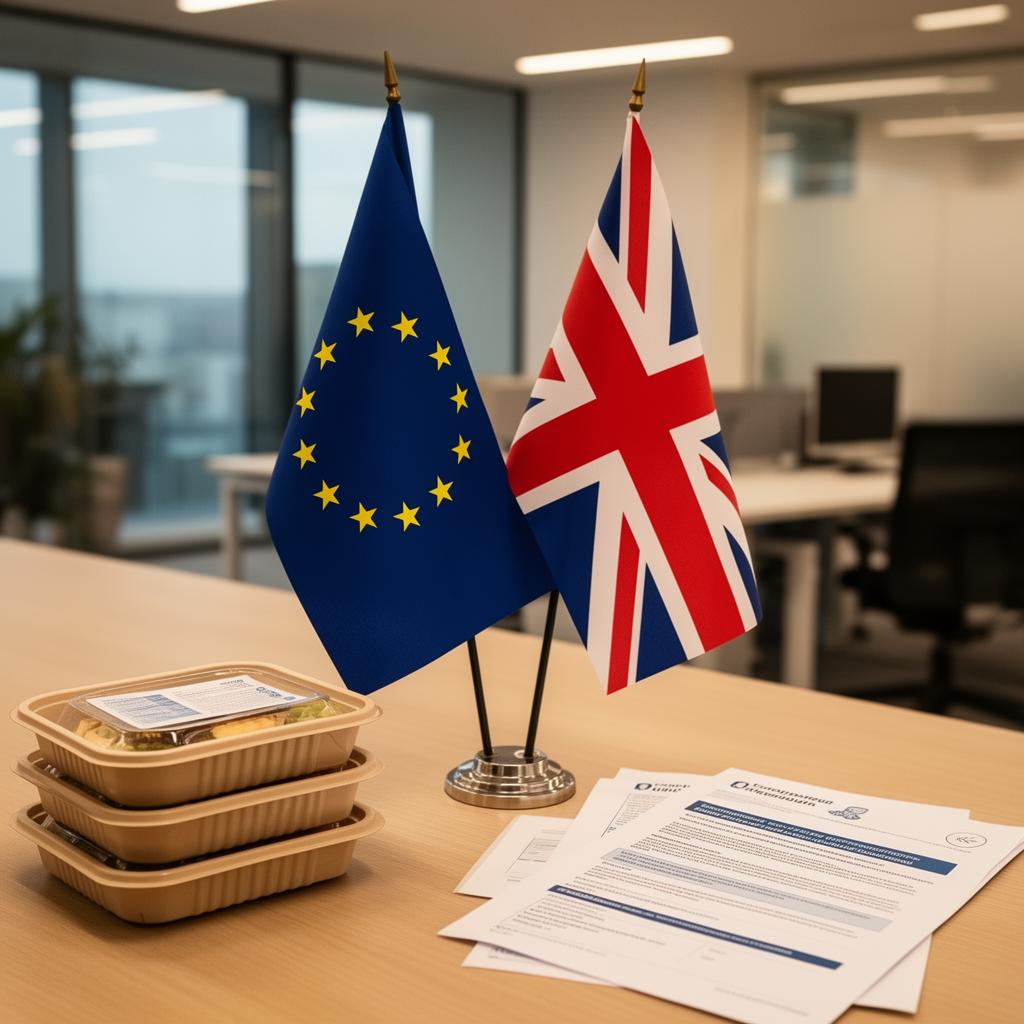
The EU's new Packaging and Packaging Waste Regulation (PPWR) creates hard deadlines from August 2026. Here's what multi-site UK food service operators need to understand and act on now.
The EU Packaging and Packaging Waste Regulation (PPWR), formally Regulation EU 2025/40, is the most significant overhaul of European packaging law in thirty years. It creates binding, uniform rules across all 27 EU member states covering recyclability, materials, labelling, reuse targets, and single-use bans. For UK food service operators, the first major deadline lands in August 2026, five months away.
What Is the PPWR and Why Does It Apply to UK Businesses?
The PPWR replaces the 1994 Packaging and Packaging Waste Directive, shifting from a framework that allowed each EU member state to interpret rules differently to a single Regulation that applies uniformly and directly across the entire EU.
It entered into force on 11 February 2025 and covers all packaging placed on the EU market, across all materials, all sectors, and all stages of the supply chain, from primary consumer packaging through to transport and service packaging.
For UK businesses, it matters on three distinct levels. Any UK operator exporting packaged goods into the EU must comply with the PPWR in full. Under the Windsor Framework, most PPWR provisions also apply in Northern Ireland. And the UK's own domestic packaging regulation, the reformed Extended Producer Responsibility (pEPR) scheme and Plastic Packaging Tax, is following a parallel trajectory, with clear signs that Defra is watching the PPWR closely as a template.
How Does the PPWR Affect Food Service Operators Specifically?
The PPWR covers the HORECA sector (Hotels, Restaurants, Cafes) directly and with specific obligations that go beyond general packaging requirements.
The PFAS Ban, August 2026
The first major deadline for food service operators is the PFAS ban, which takes effect on **12 August 2026**. PFAS, per- and polyfluorinated alkyl substances, widely known as "forever chemicals", have been routinely used as grease-proof barrier coatings in food service packaging. Burger wraps, chip scoops, pizza boxes, bakery bags. If your packaging has a grease barrier, there is a reasonable chance it contains PFAS above the new threshold.
From August 2026, food contact packaging containing PFAS above the defined concentration limits cannot be placed on the EU market. For operators exporting to the EU or operating in Northern Ireland, this is a hard legal deadline. For UK-only operators, this is a strong signal of where domestic regulation is heading.
The practical implication: packaging specifications need to be reviewed now. The reformulation process, moving to aqueous coatings, PLA barriers, or emerging bio-based alternatives, takes time, and manufacturers need lead time to adjust production.
Single-Use Plastic Bans in HORECA, January 2030
From **1 January 2030**, the following single-use plastic packaging formats are banned within HORECA premises:
- Single-use plastic packaging for food and beverages consumed on-site
- Individual plastic portions of condiments, sauces, sugar, and coffee creamer
- Single-use plastic packaging for fresh fruit and vegetables under 1.5kg
Critically, the ban targets single-use plastic specifically. Paper-based and fibre-based alternatives are not banned under the PPWR, which creates a clear strategic direction for operators currently using plastic formats in these applications.
Reuse Obligations for Takeaway
The PPWR introduces binding reuse requirements that will affect takeaway operations:
- From **February 2027**, HORECA businesses must allow customers to bring their own containers for takeaway, at no additional charge
- From **February 2028**, a reusable packaging option must be offered for takeaway hot and cold drinks and ready-prepared food, at no price premium over the single-use option
- By **2030**, at least 10% of takeaway items must be served in a recognised reuse system
For multi-site operators planning menus, supplier relationships, and packaging specifications over the next two to three years, these are not distant considerations. They are operational decisions that need to be embedded now.
What Are the Recyclability Requirements?
The PPWR introduces a grading system for recyclability, running from Grade A (95%+ recyclable) to Grade E. The timeline progressively tightens:
- By **January 2030**, only Grades A through C will be permitted on the EU market, meaning packaging below a 70% recyclability threshold is banned outright
- By **January 2035**, packaging must be recyclable at scale, closing the gap between theoretical recyclability and real-world processing
- By **January 2038**, only Grades A and B will be permitted
The 2035 "recyclable at scale" requirement deserves particular attention. A packaging format that is technically designed for recycling but for which real-world collection and processing infrastructure does not exist will not qualify. This has significant implications for multi-material laminates and certain composite formats that are common in food service today.
What Does This Mean for UK Domestic Regulation?
The UK is not bound by the PPWR following Brexit, but it is following its own parallel trajectory.
The reformed pEPR scheme launched in April 2025, with the first Notices of Liability issued to large producers in October 2025. From 2026, fees will be modulated based on a Recyclability Assessment Methodology (RAM), a traffic-light system directly linking packaging design to financial cost. The Plastic Packaging Tax continues to rise, reaching £228.82 per tonne from April 2026 on plastic packaging containing less than 30% recycled content.
The key regulatory gap: the UK currently has no equivalent to the PPWR's hard single-use bans or binding reuse targets. But the UK's decision to pause its own packaging labelling requirements pending a review of alignment with the PPWR is a telling signal. Defra is clearly considering convergence.
The pragmatic strategy for UK food service operators is to design to the higher standard. Packaging that meets PPWR requirements will, in almost all cases, exceed current UK domestic requirements. And if alignment happens, businesses that have already adopted PPWR-ready specifications will avoid costly redesign.
What Should Operators Do Now?
The packaging industry estimates that up to 80% of existing packaging formats may need redesign to meet PPWR recyclability and minimisation requirements. Packaging redesign typically takes a minimum of two years from brief to production.
That makes the timeline tight. August 2026 for the PFAS ban. 2028 for reusable takeaway options. 2030 for single-use plastic bans and Grade A-C recyclability requirements.
The operators navigating this most effectively share three things: they have direct relationships with manufacturers who can specify to regulatory requirements rather than simply supplying from existing catalogue stock. They have full visibility over their packaging spend at SKU level, so they know exactly which formats are exposed. And they are treating packaging procurement as a compliance function, not just a cost-reduction exercise.
For a free assessment of your current packaging exposure to incoming UK and EU regulation, including an SKU-level review of any PFAS-risk formats, contact Origin Sourcing at [info@originsourcing.co.uk](mailto:info@originsourcing.co.uk) or visit [www.originsourcing.co.uk](https://www.originsourcing.co.uk).

About the Author
Adam Middleton
Founder, Origin Sourcing
Adam Middleton is the founder of Origin Sourcing, a UK packaging procurement consultancy that helps multi-site food service and hospitality operators transition from merchant-based procurement to direct manufacturer sourcing. With 10 years of experience inside UK packaging merchants, Adam works across corrugated, carton, film, rigid plastic, and compostable formats to deliver verified cost savings and supply chain transparency.
Want to discuss this topic?
Our experts are ready to help you implement these insights for your business.
Get in Touch