How EPR Changed Food Service Packaging: The PLA vs Aqueous Coating Debate, Settled
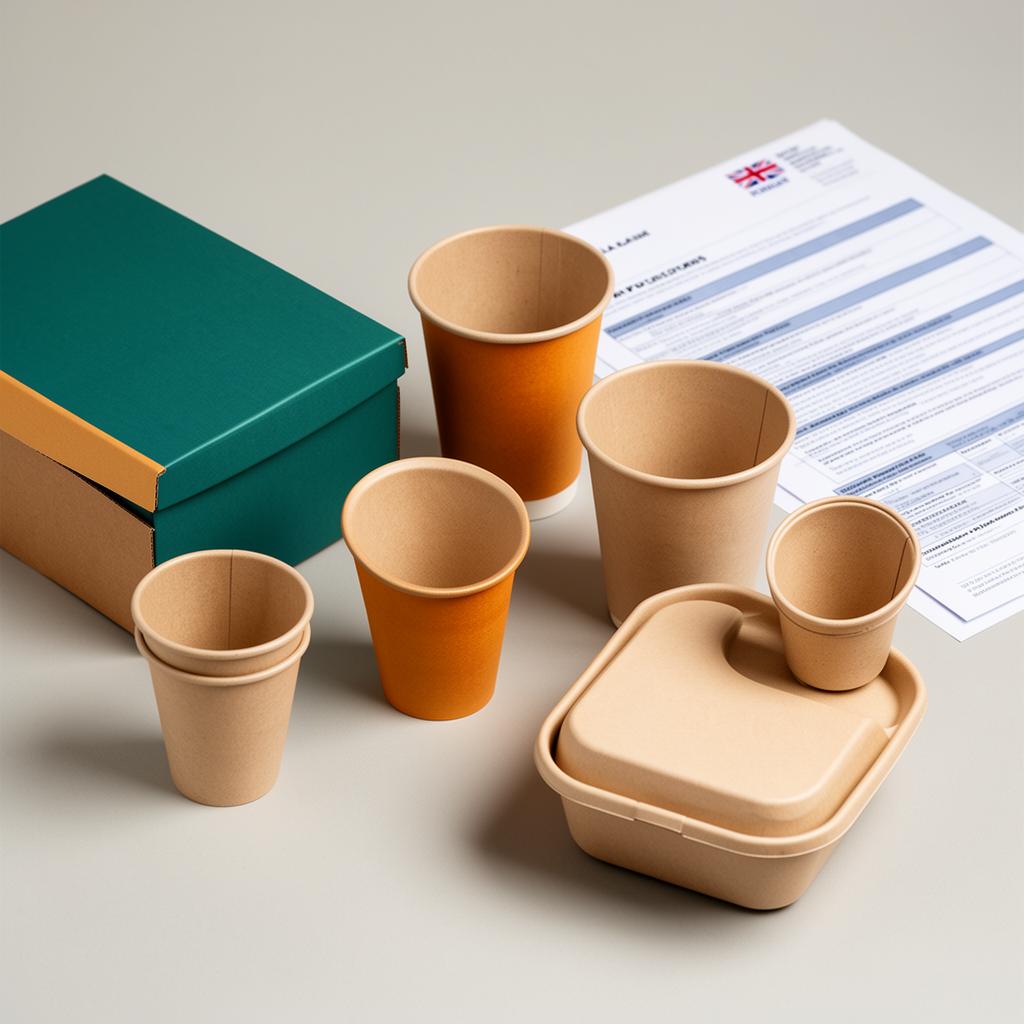
UK EPR fees created a £265/tonne gap between PLA and aqueous coated packaging. What the new fee structure means for food service operators planning 2025-2028 packaging strategy.
The UK's Extended Producer Responsibility (EPR) fee structure has effectively settled the long-running debate between PLA and aqueous coated food service packaging. Aqueous coated board is classified as paper/board at £196/tonne, while PLA coated board falls into the fibre-based composite category at £461/tonne. That £265/tonne gap, set to widen further through modulation multipliers from 2026 to 2028, means the coating decision is no longer a sustainability preference. It is a strategic cost decision with six-figure annual implications for scaled food service operators.
Why was PLA vs aqueous such a difficult choice before EPR?
For years, the food service packaging industry wrestled with a genuine dilemma.
PLA offered renewable feedstocks and industrial compostability. It represented a clear break from petroleum-based materials. Aqueous coatings worked within existing paper recycling infrastructure, avoiding the dependency on composting facilities that PLA required. Both had merit. Major brands deployed both. Suppliers invested in both. The debate was productive but unresolved.
EPR changed that. Not through regulation alone, but through pricing transparency.
What are the EPR fees for PLA vs aqueous coated packaging?
When the UK finalised its EPR fee structure in June 2025, the numbers were stark.
The base fees for 2025-2026 set paper/board at £196 per tonne and fibre-based composite at £461 per tonne. PLA coated board falls into the composite category. Aqueous coated board retains its paper/board classification. That creates an immediate £265 per tonne differential before modulation even applies.
From 2026 onward, the Recyclability Assessment Methodology (RAM) applies multipliers based on how effectively packaging can be recycled within existing UK infrastructure. Red-rated packaging pays 1.2x the base fee in 2026, rising to 1.6x in 2027 and 2.0x in 2028. Green-rated packaging receives discounts.
Run the conservative scenario. Paper/board with aqueous coating at £196 per tonne. PLA composite receiving an Amber rating at £461 per tonne. That is a 2.35x cost differential. For a scaled operator, that translates to a six-figure annual impact.
If PLA receives a Red rating due to infrastructure limitations, the spread widens to four to five times by 2028.
Why did EPR favour aqueous over PLA?
EPR did not declare PLA bad or aqueous good. It made explicit what the industry debate had been dancing around for years.
Composting infrastructure for PLA is limited in the UK. Paper recycling systems are established and functional. The fee structure reflects infrastructure reality. If your coating requires facilities that do not widely exist, you pay for that gap. If your coating works within existing systems, you benefit from that efficiency.
This is why the market is responding quickly. Packaging suppliers report accelerating demand for aqueous solutions. Major coating manufacturers including Michelman, ALTANA, and PPG are launching new formulations explicitly designed for EPR compliance. The water-based barrier coatings market was already growing at six to seven percent annually and is now seeing EPR-driven acceleration.
Operators who deployed PLA as a safe compliance option are reassessing their strategies.
What does this mean for food service operators planning packaging transitions?
This is not just cost optimisation. EPR has transformed packaging from a sustainability narrative into a strategic business decision.
Operators planning packaging transitions or contract renewals in 2025-2026 are making decisions that will lock them into coating strategies through the peak modulation period. The theoretical fee differentials from 2025 will become real profit and loss line items.
There are four strategic priorities worth considering.
1. Audit actual performance requirements at granular level
Over-specification is now expensive. Coffee cups need different coatings than cold beverage containers. High-grease food packaging has different requirements than dry goods. Match coating specifications to actual application needs rather than applying a blanket approach.
2. Model full cost across time horizons
2025 base fees are just the starting point. What if your packaging receives different RAM ratings? What if modulation multipliers create larger spreads than expected? The cheapest solution today may not be cheapest in 2027.
For context, a scaled operator using 1,000 tonnes annually faces a £265,000 immediate cost difference between coating strategies. That could rise to £500,000 or more by 2028, depending on RAM outcomes.
3. Build supply chain optionality
The winners will not be those who picked the right coating in 2025. They will be those who built flexibility to adapt as technologies evolve and economics shift. Maintain relationships with suppliers across coating technologies. Structure contracts with transition flexibility. Build internal expertise to evaluate new options quickly.
4. Understand where aqueous works and where it does not
Aqueous coatings have made significant performance improvements, but limitations remain. They perform well for cold beverages, short-duration applications, and moderate moisture and grease exposure. They still face challenges with hot liquids, extended hold times, and high-grease foods.
Strategic operators are building differentiated approaches. Aqueous where performance is adequate, capturing cost savings. Premium coatings where application demands require it, justifying the EPR premium with clear technical requirements.
How does this create competitive advantage in food service?
Packaging strategy is moving from brand positioning to genuine competitive advantage.
Direct cost impact means EPR differentials are becoming material line items on the profit and loss statement. Diversified coating options provide supply chain resilience as markets evolve. Packaging that is genuinely recyclable in systems that actually exist carries more weight than theoretical compostability. And the ability to match specifications to requirements and adapt quickly is becoming a differentiator in its own right.
Operators with sophisticated packaging strategies will have materially lower costs and stronger positioning than competitors treating this as a compliance exercise.
What happens next with EPR and packaging coatings?
The market will continue evolving. Aqueous coating performance will improve further. Natural polymer coatings, including technologies like Morro coating, are in development and could offer strong barrier properties with minimal infrastructure dependencies. If they deliver on degradation promises, they could be optimal under EPR economics.
But those are medium-term developments. For operators making decisions now, the strategic path is clear.
In the near term through 2025 and 2026, the shift to aqueous accelerates as modulation becomes a real cost. The focus should be on optimisation and getting coating strategy right for each application category.
Through 2026 to 2028, modulation multipliers reaching full implementation create compelling pressure to redesign Red-rated packaging. Early movers who built expertise and supplier relationships will capture advantages.
The question for every food service operator is whether they are building packaging strategy as a competitive capability or managing it as a compliance requirement. The cost differential over the next three years will make that distinction very clear.

About the Author
Adam Middleton
Founder, Origin Sourcing
Adam Middleton is the founder of Origin Sourcing, a UK packaging procurement consultancy that helps multi-site food service and hospitality operators transition from merchant-based procurement to direct manufacturer sourcing. With 10 years of experience inside UK packaging merchants, Adam works across corrugated, carton, film, rigid plastic, and compostable formats to deliver verified cost savings and supply chain transparency.
Want to discuss this topic?
Our experts are ready to help you implement these insights for your business.
Get in Touch